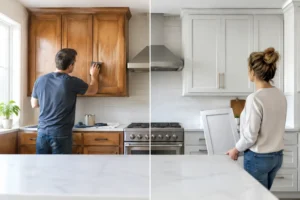
A kitchen can feel dated long before its cabinets stop functioning. If the boxes are solid, doors operate properly, and the layout still works for your household or rental property, painting can deliver a major visual change without the expense and disruption of replacement. So, how much does cabinet painting cost? For professionally painted kitchen cabinets in the Niagara region, many projects fall between approximately $2,500 and $7,500 CAD, with larger, more detailed, or repair-heavy kitchens costing more.
That range is useful for early planning, but cabinet painting is not priced accurately by cabinet count alone. The size of the kitchen matters, but so do the cabinet material, existing finish, amount of prep work, door style, repairs, and the finish you choose. A clear on-site assessment is the best way to receive a quote that reflects the work your cabinets actually need.
How Much Does Cabinet Painting Cost for a Typical Kitchen?
For a small kitchen with straightforward cabinet doors and sound existing surfaces, professional cabinet painting may start around $2,500 to $3,500 CAD. A mid-sized kitchen with a mix of upper and lower cabinets, drawers, and standard preparation often lands in the $3,500 to $5,500 CAD range. Larger kitchens, two-tone finishes, extensive trim, detailed profiles, islands, pantry units, or significant repairs can range from $5,500 to $7,500 CAD or more.
These figures generally reflect a professional refinishing process rather than a quick brush-and-roll refresh. Cabinet painting requires more than applying a new color. The finish must stand up to repeated cleaning, cooking moisture, fingerprints, opening and closing, and daily contact around handles and edges.
A contractor should explain what is included before work begins. A lower price may be appropriate for a small, simple project, but it can also indicate that key preparation steps, repair work, protective coatings, or removal and reinstallation are not included. Comparing scope is more useful than comparing one number against another.
What Drives Cabinet Painting Pricing?
Cabinet size and design
More doors and drawer fronts mean more surfaces to clean, sand, prime, paint, and reinstall. Cabinet design matters as much as quantity. Flat-panel doors are generally faster to prepare than shaker doors, raised-panel profiles, glass inserts, open shelving, decorative end panels, crown molding, or built-in pantry sections.
An island may add cost, particularly when it has panels on multiple sides or is being finished in a second color. Two-tone kitchens require more setup, masking, and material management than a single-color finish.
Surface condition and repairs
Cabinets with peeling coatings, grease buildup, water damage near the sink, chipped corners, loose hinges, dents, or failed caulking need attention before painting. Paint can improve appearance, but it cannot solve movement, swollen particleboard, delamination, or structural damage without repair.
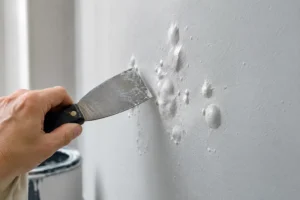
Preparation is where durable cabinet finishes are made. Cleaning removes kitchen residue that can interfere with adhesion. Sanding or deglossing creates a surface the coating can grip. Filling, caulking, and minor repairs help create crisp lines and a more finished appearance. If these steps are skipped, even premium paint may chip or peel prematurely.
Existing cabinet material and finish
Solid wood, MDF, laminate, thermofoil, and previously painted cabinets each need a different approach. Wood cabinets with a stable finish are often strong candidates for painting. MDF can also paint well when edges and damaged areas are properly sealed.
Laminate and thermofoil require careful assessment. A sound, firmly bonded surface may be paintable with the right cleaning, abrasion, primer, and coating system. If the surface is lifting or peeling, however, the long-term result may be limited unless damaged material is repaired or replaced. A professional should identify these conditions before providing a final scope.
Paint system and desired finish
Cabinets need a coating system designed for hard-working surfaces. The cost of quality primer, cabinet-grade paint or coatings, and protective materials is higher than standard wall paint, but it helps produce a smoother, more washable finish.
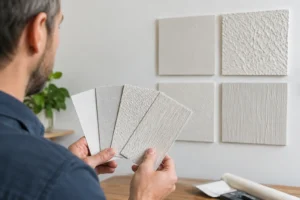
The requested sheen can also affect the final look. Satin and semi-gloss are common choices because they offer cleanability and visual durability. Higher sheens can highlight door profiles and brighten a kitchen, but they also reveal dents, sanding marks, and surface flaws more easily. The smoother the desired finish, the more careful the preparation must be.
Jobsite protection and workflow
Professional cabinet painting involves protecting countertops, flooring, appliances, backsplashes, and nearby living areas. Doors and drawer fronts may be removed, labeled, and refinished separately for better access and consistency. Hardware removal, masking, ventilation, and cleanup all take time, but they reduce disruption and protect the rest of the home.
Occupied homes and rental properties may require work to be phased around access, tenants, pets, meal preparation, or move-in schedules. Clear scheduling is part of a well-managed project, especially when the kitchen is central to daily life.
What Should a Professional Cabinet Painting Quote Include?
A detailed quote should make it easy to understand what you are paying for. It should identify which cabinets and surfaces are included, the planned preparation and repair work, the number of coats, the coating system, and whether doors, drawers, trim, panels, and interiors are included.
It should also state how hardware will be handled. Existing handles and hinges can often be removed and reinstalled, while new hardware may require filling old holes and drilling new ones. That extra work should not be a surprise after the project begins.
Ask about site protection, cleanup, expected project timing, and the final inspection process. Cabinet paint needs appropriate drying and curing time, so a contractor should give practical guidance on when doors can be reinstalled and when cabinets can return to normal use. The finish may feel dry before it reaches full hardness.
Cabinet Painting vs. Cabinet Replacement
Painting is often the better value when cabinet boxes are structurally sound and the current layout meets your needs. It can update a dark, worn, or mismatched kitchen at a fraction of the cost of new cabinetry while avoiding demolition, plumbing changes, countertop removal, and extended downtime.
Replacement makes more sense when cabinets have serious water damage, failing construction, poor storage, or a layout that no longer serves the space. If you are moving walls, changing appliance locations, or planning a complete kitchen redesign, new cabinets may be the more practical investment.
There is also a middle option: paint the cabinet boxes and doors while updating handles, hinges, lighting, backsplash, or countertops. This approach can give a property a coordinated, market-ready appearance without committing to a full renovation.
How to Keep Cabinet Painting Costs Predictable
The best way to manage cost is to define the scope early. Decide whether you want exterior cabinet faces only or interiors as well, whether the island will be a separate color, and whether hardware will stay in the same location. Share any known issues, such as peeling doors, water damage, or loose hinges, during the estimate.
Avoid choosing a contractor based only on the lowest price. Cabinet refinishing is a detail-focused service, and the value is in the preparation, materials, controlled application, and accountability behind the finish. A clear, upfront quote helps prevent change orders and gives you a realistic expectation of the result.
For homeowners, landlords, and property managers in St. Catharines and the surrounding Niagara area, Qpainting Services can assess cabinet condition, explain the recommended process, and provide a fast, no-obligation quote. The right cabinet painting project should leave you with a cleaner, more current kitchen and confidence that the finish was built for everyday use.