Faded brick can make an otherwise well-kept property look tired, but a full replacement is rarely necessary. Professional brick staining services give homeowners and property managers a way to refresh exterior masonry, correct uneven color, and improve curb appeal while keeping the natural character and texture of the brick visible.
For properties in St. Catharines and across the Niagara region, this is often a practical choice for aging facades, additions with mismatched brick, repaired masonry, fireplaces, and exterior accents. The right result depends less on choosing a trendy color and more on understanding the condition of the brick, the repair history behind it, and the finish needed to hold up over time.
What Brick Staining Changes – and What It Does Not
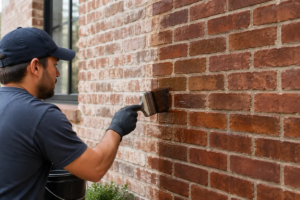
Brick stain is designed to penetrate masonry rather than sit on top of it as a solid film. That distinction matters. A properly selected stain can adjust the brick’s color while allowing its pores, variation, and surface texture to remain apparent. The finished surface generally looks more like naturally colored masonry than coated masonry.
Brick painting creates a uniform opaque layer. It can be an effective option when a homeowner wants a complete color transformation or needs to cover extensive visual inconsistencies. However, paint requires thoughtful surface preparation and ongoing maintenance because it forms a coating over the brick. Stain is often the better fit when the goal is to preserve the brick’s natural appearance rather than hide it.
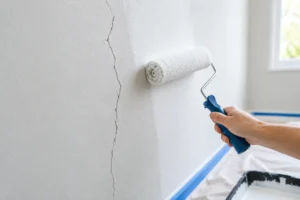
Neither service repairs failing masonry on its own. Crumbling mortar, loose bricks, active moisture problems, and major cracks should be assessed and addressed before a finish is applied. A dependable contractor will identify those concerns early rather than treating color as a shortcut around a structural or water-management issue.
When Brick Staining Services Are a Smart Choice
Brick staining is especially useful when the masonry is fundamentally sound but its appearance no longer matches the rest of the property. Sun exposure can leave one elevation lighter than another. A repaired area may stand out because replacement bricks do not match the original. An addition can look disconnected from the main house, even when the construction work itself was done well.
It can also make sense before listing a property for sale. Exterior presentation shapes the first impression buyers have before they enter the home. Refreshing blotchy or dated-looking brick may help the property feel more cared for without the cost and disruption of rebuilding a facade.
For landlords and property managers, staining can be a targeted improvement between tenancies or during a larger exterior refresh. It works particularly well alongside trim painting, door painting, garage painting, or deck and fence staining, where several worn exterior surfaces need to look intentional together.
There are situations where staining is not the best recommendation. If brick has been sealed with an incompatible product, is heavily deteriorated, or has persistent efflorescence caused by moisture moving through the wall, the underlying condition needs attention first. In these cases, a clear explanation of the scope is more valuable than a quick promise of cosmetic improvement.
The Preparation Behind a Long-Lasting Finish
The visible color change is only one part of the job. Surface preparation determines whether the finish looks even and performs as expected. Brick collects dirt, mildew, dust, loose debris, and mineral deposits over years of exposure. These conditions can interfere with stain absorption and create an inconsistent result if they are not addressed.
A professional process begins with an on-site assessment of the masonry, mortar joints, prior coatings, repairs, and surrounding surfaces. This helps determine whether the brick is a candidate for staining and whether cleaning, minor preparation, or masonry repairs are needed before the color work begins.
Protection of nearby areas is equally important. Windows, trim, landscaping, walkways, fixtures, and adjacent siding should be carefully covered or masked as needed. Exterior work should feel organized, not disruptive. Clear work areas and daily cleanup help keep the property usable while the project is underway.
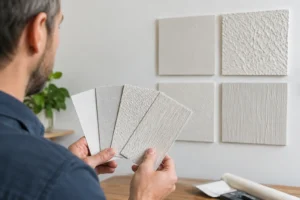
Color testing is another step that should not be skipped. Brick is not a uniform material, and a shade can look different in direct sunlight, shade, or against existing trim. A small test area allows the homeowner to see how the chosen tone interacts with the property before the full application proceeds. This is particularly helpful when blending repairs or reducing the contrast between old and new sections of masonry.
Choosing a Brick Stain Color That Will Age Well
The safest color choice is not always the lightest, darkest, or most dramatic one. Brick staining tends to look best when it supports the fixed elements that are difficult or expensive to change, such as roofing, stonework, windows, and hardscaping.
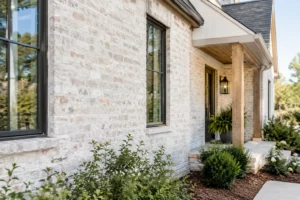
Warm red and brown brick can often be softened with deeper neutral tones, while orange-heavy brick may benefit from a more balanced brown or muted gray-brown direction. Darker stains can add definition and make a home feel more current, but they may show dust, weathering, and future repair differences more clearly. Lighter adjustments can brighten a facade, though overly pale colors may look artificial if they fight against the mortar or roof color.
For a traditional home, subtle color correction may be all that is needed. For a contemporary update, a deeper or more uniform tone may be appropriate. The right choice depends on the architecture, the condition of the existing brick, and whether other exterior finishes are also being updated.
What to Expect From a Professional Brick Staining Project
A clear process reduces surprises. The project should begin with a no-obligation estimate that identifies the surfaces to be stained, visible preparation needs, color approach, and any conditions that could affect the final scope. Upfront pricing is especially important with masonry because hidden damage or prior coatings can change the work required.
Once the plan is approved, the crew should confirm scheduling, prepare the work area, complete the agreed cleaning and surface work, and apply the stain in controlled sections for consistent coverage. Weather matters for exterior finishes. Temperature, moisture, rain, and drying conditions may affect the schedule, and a professional contractor should adjust rather than rush an application in poor conditions.
The final walkthrough is the time to review the completed areas together. Look at the finish from normal viewing distances as well as up close, check the transitions around repairs and edges, and confirm that the work area has been left clean. A workmanship guarantee adds accountability, but the best protection is a contractor who communicates clearly from the first estimate through the final inspection.
Brick Stain Maintenance and Realistic Expectations
Stained brick is generally lower maintenance than a painted brick surface, but it is not maintenance-free. Gentle periodic cleaning can remove surface dirt and help preserve the appearance. Avoid aggressive pressure washing or harsh cleaning methods unless the material and condition of the masonry have been evaluated first.
Over time, exposure levels may create slight variation, especially on walls that receive strong sun or driving rain. This is normal for exterior materials. A quality stain and careful application help provide lasting color, but no contractor should promise that outdoor masonry will look unchanged forever.
If future repairs are needed, keeping a record of the stain color and application details can make blending easier. That small step is useful for homeowners and property managers planning long-term care for the property.
A brick finish should make the home look better cared for without making it look unlike itself. When the masonry is properly assessed, carefully prepared, and finished with the right color approach, brick staining can provide a durable update that respects the character already built into the property. Qpainting Services can help local property owners review their exterior, understand the scope, and move forward with clear pricing and a finish designed to last.