A bathroom can look freshly painted for months, then start showing peeling near the shower, dark marks around the fan, or dull spots where walls are cleaned often. Choosing the best bathroom paint finishes is not only about the shine you prefer. It is about how the room handles steam, moisture, daily cleaning, surface wear, and the condition of the walls underneath.
For most bathrooms, satin and semi-gloss finishes provide the best balance of cleanability and moisture resistance. The right choice still depends on the room’s ventilation, the amount of use it gets, and whether drywall repair or other preparation is needed before painting begins.
Why Bathroom Paint Finish Matters
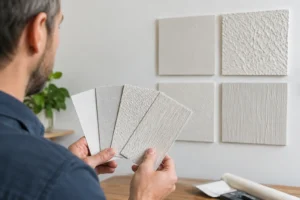
Paint sheen affects both appearance and performance. Higher-sheen finishes form a tighter surface that is generally easier to wipe clean and less likely to absorb moisture. Lower-sheen finishes soften the look of a room and help hide small wall imperfections, but they can be less forgiving in a humid space.
Bathrooms create conditions that other rooms do not. Hot showers produce condensation, wet towels raise humidity, and repeated cleaning puts pressure on painted walls. A finish that looks good in a bedroom may not hold up as well beside a shower or tub.
The paint itself also matters. A quality interior paint designed for bathrooms, kitchens, or high-humidity areas offers better resistance to moisture and staining than standard wall paint. Finish and product should be selected together rather than treating sheen as the only decision.
The Best Bathroom Paint Finishes by Surface
Satin: The Best Choice for Most Bathroom Walls
Satin is often the practical choice for bathroom walls. It has a soft, low-level sheen that reflects some light without looking overly glossy. Most homeowners find it polished enough for a primary bathroom while still being easy to maintain.
Its smooth surface handles regular wiping better than flat or matte paint, making it a strong option around sinks, toilets, and towel areas. Satin also works well in powder rooms, guest bathrooms, and larger bathrooms with adequate exhaust ventilation.
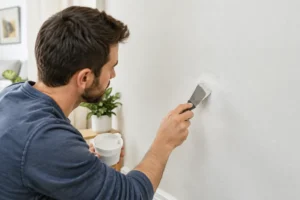
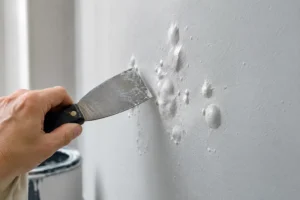
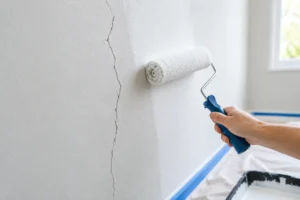
There is a trade-off. Satin can reveal uneven drywall patches, roller marks, or poorly repaired areas more readily than a flat finish. Careful wall preparation makes a visible difference. Cracks, dents, peeling paint, and rough patches should be repaired, sanded, and primed before the finish coat goes on.
Semi-Gloss: Best for High-Moisture and High-Use Bathrooms
Semi-gloss has a noticeable shine and is one of the most durable finishes available for interior bathroom painting. It resists moisture well, stands up to frequent cleaning, and is especially useful in busy family bathrooms or bathrooms that see heavy shower use.
This finish is a dependable choice for trim, doors, baseboards, and window casings in any bathroom. Those surfaces receive more contact from hands, cleaning products, and everyday movement, so the added durability is useful.
Semi-gloss can also be used on walls, particularly near a shower or in a bathroom with weak ventilation. The drawback is that its shine highlights imperfections. If walls have older drywall repairs, uneven texture, or damage from past moisture, the surface preparation needs to be thorough. Otherwise, light reflecting off the wall may make flaws more noticeable.
Eggshell: A Conditional Option for Low-Moisture Spaces
Eggshell has less sheen than satin and gives walls a softer, more traditional look. It can work in a powder room or a well-ventilated bathroom that does not receive much steam. For example, a rarely used guest bathroom with no shower may be a reasonable place for a quality washable eggshell paint.
For a full bathroom used every day, eggshell is usually not the first recommendation. It does not offer the same cleaning ease or moisture resistance as satin or semi-gloss. Choosing it for appearance alone can lead to early wear in areas exposed to humidity and splashes.
If you prefer a lower-sheen look, use a premium product specifically rated for bathroom conditions and make sure the exhaust fan is properly sized and used consistently.
Matte or Flat: Usually Best Reserved for Ceilings
Flat paint is excellent at hiding imperfections, but it is difficult to clean and more vulnerable to moisture. It is rarely the right finish for bathroom walls, especially near a shower, tub, or vanity.
For ceilings, however, a moisture-resistant flat or matte ceiling paint can be a good fit. It minimizes glare and helps disguise minor ceiling irregularities. The key is to use paint made for humid rooms, not a basic flat wall paint. If the ceiling has staining, peeling, or mildew, those issues need to be addressed before repainting.
Do Not Let Sheen Cover Up a Moisture Problem
Even the best paint finish cannot solve ongoing moisture damage. Blistering paint, persistent staining, soft drywall, or dark spots around the ceiling may indicate a ventilation issue, a plumbing leak, or repeated condensation.
Before painting, check that the bathroom fan vents outdoors and runs long enough after bathing to remove humid air. Opening a window can help, but it is not a full substitute for proper mechanical ventilation in a frequently used bathroom. A fan that is clogged, undersized, or rarely used can shorten the life of any paint job.
Mildew should be cleaned safely and completely, and the cause of the moisture should be corrected. Painting over it may hide the problem briefly, but the staining and growth can return. Where drywall has softened, bubbled, or deteriorated, repair or replacement is often needed to create a sound surface for primer and paint.
Preparation Is What Makes a Bathroom Finish Last
A durable bathroom paint job starts long before the final coat. Walls should be cleaned to remove soap residue, hairspray, body oils, and household cleaners that can interfere with adhesion. Glossy existing paint may need light sanding so the new coating can grip properly.
Any damaged caulk around trim, window frames, or baseboards should be removed and replaced where appropriate. Gaps allow moisture into areas that are harder to dry and clean. Small drywall dents and nail holes should be repaired, while larger cracks or damaged sections deserve a closer assessment.
Primer is not always required for a simple repaint, but it is valuable over repaired drywall, stains, bare patches, significant color changes, or surfaces with questionable adhesion. The correct primer creates a more even base and helps the finish coat perform consistently.
Application also matters. Two properly applied coats generally provide better coverage and durability than one heavy coat. Allowing appropriate drying time between coats is especially important in a humid bathroom, where trapped moisture can interfere with curing.
Choosing a Finish for Bathroom Cabinets and Trim
Bathroom cabinets need a tougher approach than walls. Vanity doors and drawers are touched constantly, exposed to splashes, and cleaned more often. A durable satin or semi-gloss coating is typically the better choice, but successful cabinet painting depends heavily on cleaning, sanding, priming, and using a coating suited to cabinets.
For trim and doors, semi-gloss remains a reliable standard. It gives a crisp contrast against satin walls, wipes clean easily, and stands up well to scuffs. Satin trim can work if you want a more understated appearance, but it may not be as forgiving in a busy household.
A consistent sheen plan helps the room feel intentional: satin walls, moisture-resistant flat ceiling paint, and semi-gloss trim and doors is a practical combination for many homes.
When Professional Assessment Saves Time
Bathrooms often reveal hidden surface problems after old paint is removed or cleaned. Previous patchwork, wallpaper adhesive, water stains, cracked caulk, failing drywall, and paint layers that are peeling can all affect the final result. A professional assessment helps determine whether the project needs straightforward repainting or more detailed repair and preparation.
For homeowners, landlords, and property managers, that assessment also makes pricing and scheduling clearer before work begins. Qpainting Services approaches bathroom painting with attention to the condition of the surface, the room’s moisture exposure, and the level of durability the space requires. Proper preparation helps create a finish that looks clean on day one and continues to perform through daily use.
The best finish is the one that fits how the bathroom actually functions. Choose satin for a balanced, easy-care wall finish, step up to semi-gloss where moisture and cleaning are constant, and make ventilation and surface repair part of the plan from the start.