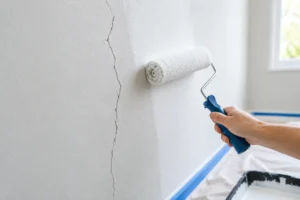
A fresh coat can make a tired room look remarkably better, but does paint cover drywall cracks? Usually, no – not in a lasting way. Standard wall paint may make a very fine hairline crack less noticeable for a short time, especially in low-contrast lighting. It does not fill, reinforce, or stop the crack from returning. For a smooth finish that holds up, the cause and condition of the crack need attention before painting begins.
For homeowners, landlords, and property managers, that preparation is often the difference between a room that looks professionally refreshed and one where flaws reappear a few weeks later. The good news is that many drywall cracks are repairable without a major renovation. The right repair depends on the crack’s size, location, movement, and what is happening behind the wall.
Does Paint Cover Drywall Cracks for Good?
Regular interior paint is designed to provide color and a protective finish, not to bridge gaps in drywall. Even thick paint has limited build, and it shrinks slightly as it dries. A crack that is visible before painting will commonly remain visible afterward, or it will show again once the paint fully cures.
Flat paint can disguise tiny surface imperfections better than satin or semi-gloss finishes because it reflects less light. That can be useful for walls with minor texture variations, but it is not a repair method. Under daylight, side lighting, or a close inspection, an unrepaired crack can still cast a shadow or create a thin line through the new finish.
Some paint products are marketed as crack-resistant or elastomeric. These coatings can have a place on certain exterior surfaces and may help with extremely fine, stable cracks in limited situations. They are not a substitute for repairing drywall seams, loose tape, or cracks caused by ongoing movement. Applying specialty paint over an active crack may delay the problem, but it will not solve it.
Why Drywall Cracks Appear
Drywall is installed in large sheets, with joints covered by tape and joint compound. Cracks often appear at those joints when the home naturally settles, materials expand and contract, or the original seam repair loses its bond. Seasonal humidity changes can also affect framing and drywall, particularly in homes that experience dry winters and humid summers.
A single, thin crack above a door or window is often related to normal settling. Small cracks at a ceiling-to-wall joint can also be common, particularly in newer construction. These areas experience movement, and a carefully repaired seam can usually restore a clean appearance.
Other cracks deserve a closer look. A crack that widens over time, runs diagonally from a window or door corner, keeps returning after repair, or is paired with sticking doors, sloping floors, or water staining may point to a larger issue. Water damage, a roof or plumbing leak, and structural movement should be addressed before cosmetic work begins. Painting over moisture-damaged drywall can trap the visible problem behind a new finish while the material continues to deteriorate.
When a Crack May Need More Than Paint
The location of a crack provides useful clues. Hairline cracks limited to a drywall seam are often straightforward repairs. Wider cracks, separated drywall edges, bubbling tape, or soft areas of wallboard call for more thorough preparation. If the drywall is loose or wet, joint compound alone will not create a dependable repair.
Ceiling cracks also require care. A small seam crack may be repairable, but a sagging ceiling, discolored area, or crack that follows a water stain should be inspected for an active leak or damaged material first. The same applies to cracks around plumbing walls, below bathrooms, and near exterior windows.
For rental turnovers and pre-sale updates, it can be tempting to use paint as a quick visual fix. That approach can cost more when the crack reopens shortly after tenants move in or buyers view the property under bright lighting. Repairing the surface properly helps protect the value of the painting work and avoids an unfinished appearance.
The Right Way to Repair Drywall Cracks Before Painting
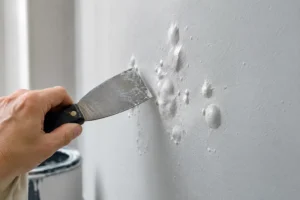
A durable repair starts by removing anything loose. If tape has lifted, the failed section is cut away rather than buried under more compound. The crack is then opened slightly when needed, cleaned of dust, and stabilized. Depending on the damage, a professional may use joint tape, a patch, fasteners, or a setting-type compound to rebuild the area.
The repaired area is coated in thin layers, allowing each layer to dry before the next is applied. Trying to fill a deep crack in one heavy application can lead to shrinkage, uneven drying, or a visible ridge. After the final coat dries, the surface is sanded smooth and feathered well beyond the repair so it blends into the surrounding wall.
Primer is the next important step. Fresh joint compound is porous and absorbs paint differently than an already painted wall. Spot-priming the repair helps prevent flashing, which is a dull or shiny patch that becomes visible after the finish coat dries. Once primed, the wall can be painted with the selected sheen for a consistent result.
Texture and sheen affect visibility
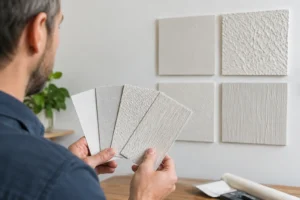
Smooth walls show repairs more easily than heavily textured surfaces, especially with satin, eggshell, or semi-gloss paint. A professional repair includes more than filling the crack. It also considers the wall texture, the direction of natural light, and how far the repair needs to be feathered to disappear into the field of the wall.
On a wall with orange peel, knockdown, or another texture, matching the texture before priming and painting is often necessary. Without that step, the crack may be gone but the patch can still stand out. In rooms with strong sunlight or bright overhead fixtures, repainting the full wall after the repair typically produces a more uniform finish than touching up one small area.
Can You Paint Over a Hairline Crack?
You can, but the results are unpredictable. If the line is truly superficial and stable, two coats of quality paint may make it difficult to notice from a normal viewing distance. That may be acceptable for a temporary refresh in a low-visibility area. It is not the best choice for a main living room, hallway, entry, or a property being prepared for sale.
A simple test is to look at the crack from different angles and run a fingernail lightly across it. If you can feel an opening, see raised edges, or notice loose paint or tape, paint alone will not provide a clean result. Repairing it first is the more efficient choice.
Avoid applying caulk to every drywall crack. Paintable acrylic caulk can be useful at certain trim joints or small gaps where different materials meet, but it is not the right product for most flat drywall seams. It can leave a flexible ridge, collect dust, and look obvious on a smooth wall.
A Professional Finish Starts With Surface Preparation
The visible paint coat is only one part of a successful interior painting project. Proper cleaning, drywall repair, sanding, spot priming, masking, and final inspection all support a finish that looks even and lasts. Skipping preparation may save time on day one, but it often creates callbacks, touch-ups, and early repainting needs.
At Qpainting Services, drywall repairs are assessed as part of the painting scope so the recommended work matches the condition of the surface. Clear, upfront pricing helps property owners understand whether a crack needs a small repair, a larger patch, or further investigation before painting begins. The goal is minimal disruption without treating a visible defect as something paint can permanently hide.
If you are planning to repaint and have cracks you are unsure about, take a closer look before choosing a color. A quick repair completed correctly gives the new paint a sound surface to protect – and gives the room the finished, well-cared-for appearance you intended.